Showing posts with label fear. Show all posts

Monday, October 7, 2013

Hanging out backstage

I already wrote a bit about what and what not to do just before a performance. Among my suggestions are:

  • Don't play entire pieces before a performance. The distraction of nerves can make for lapses, and then those lapses will haunt you when you're playing the actual program. 
  • Don't review your entire program backstage. This practice invites self-doubt.
  • I also don't advocate creating ritual to your backstage experience. What happens if you don't have enough time for your ritual? Does it mean that things won't go well?
So, don't play, and don't review. What are you supposed to do? Those green rooms can be dark and lonely places!
  • I don't think it hurts to check a few things, such as tempi (with a metronome) and landmarks. Just don't become obsessive about it.
  • Meditation has a centering effect. Breathe and relax while focusing positively on your upcoming performance. Visualize success.
If you're not an advanced meditator, you can only do so much--and backstage time can be fairly lengthy. With that in mind, it's not a bad idea to get your mind off of the performance itself. Try to read. Play a game on your smartphone. Of course, always be aware of time so that you're not caught off guard when it's time to go. 

I've often found that backstage crew can be very, very poor people to talk to before a performance. They're often not that interested in the concert, and they can be quite silly. Your backstage time should be used to clear your mind and your nerves, so even if you're trying to take your mind off of the performance, be careful with how you do it.

I always bring snacks and water for my time backstage, and I always make sure to have something to eat at intermission. My sense is that digestion takes away some of my nervous energy. At intermission, I usually need some energy, and food helps in that way, too. Bananas are known for their stress-reducing properties, so I tend to bring a couple with me as well. Because the stress of playing seems to dry out my throat, I always make sure that I have plenty of water on hand.

None of these suggestions are, of course, germane to the memorized performance, but, as memorization takes more focus than playing from score, it doesn't hurt to remind yourself of these good habits. In an ideal world, backstage time would be fun and exhilarating. But more often than not, it isn't...so be prepared!


Wednesday, October 2, 2013

Practice performances redux

I've already discussed practice performances in the context of playing a newly-learned piece or two. But now, with a recital on the horizon, you should be planning one or two practice performances of the entire recital. In the case of a few pieces, it's relatively easy to find a moment when you can play for someone or a small group. But a full recital takes commitment, not just for you but for your practice audience as well.
A tough crowd

Just as I wrote before, you want to make sure that your audience makes you nervous. To that end, your practice recital should not be too casual, and it should strive to replicate the emotions that will be present for the public recital. You can have a lot of fun with this, and you can turn it into a nice event, as opposed to an academic exercise.

I'm a very lucky guy in that I can use my home as a practice venue. I'm even more lucky in that my girlfriend is really into this. Not only can I tap into her guest list as well as my own, she also likes to plan a really great cocktail party for afterwards. What's nice about her guest list is that, inevitably, there are audience members I've never met before, and this keeps me on my toes. Even more so, it's nice to have someone to act as host so that I can focus on what I'm there to do. For my own house recitals, I print programs, set up formal seating (as formal as I can be), and plan an intermission. In other words, I try to make it as real as possible.

If you don't have a home venue, you can always rely on some old standbys: churches, other people's homes, or even nursing homes. Whatever venue you choose, however, it's important to let the audience know that you're playing a practice recital. This isn't to take the edge off of your nerves, but it is to let the audience know exactly why they're there. I mention this because, especially if you're playing in a church or nursing home, it's very easy for some venues to appropriate your practice event into something bigger than what you intend it to be. Just be careful.

It may go without saying, but you need to be thoughtful about your audience. If you're performing locally, be careful that you don't siphon off your local audience by inviting them to your practice recital. In local cases, I tend to invite people whom I know are unable to attend the "real" recital. In addition, develop a rotating list of guests so that you're not always inviting the same people every time. Otherwise, they might get bored with you, and you'll cease to be nervous with them.

Just as I recommended for playing a few pieces, you can always use Google+ or another resource to stream your practice recital to the internet. You might not get a nice cocktail hour out of it, but it is an option when you have trouble coming up with an audience. And who knows? You might even build an internet following!


Wednesday, September 25, 2013

Improvisation

What are your options if you have a lapse? You could stop playing. You could start all over from the beginning. You could become angry and repeat a passage over and over again, much to the general discomfort of your audience. 

These are all really bad ideas. How about this? You could improvise until you make your way forward or backward to a landmark.

It's easy for me to think about improvisation. After all, I make a significant portion of my income as a church organist, and improvisation is at the heart of any successful organist's career. But maybe you don't have any experience with improvisation--especially in front of an audience.

If you do have a lapse, it may be possible to jump directly to a landmark. I find that this can work well, depending on the situation. But, in many cases, you don't have that option, so you need to have a plan. To begin, don't think of improvisation as something that you have to bring to a high artistic level. Let's save that for the jazz musicians and the great French cathedral organists. Your improvisation is going to have a very practical purpose: to get from A to B--or maybe from B to A. It doesn't need to be anything more than that.

You now know what your improvisation needs to do. Let's consider what it needs to be. First, it needs to be in the key of what you're playing, and it will need to modulate if your next landmark is in another key. If you know your landmarks well, you have a pretty good idea of what keys they start out in. Second, your improvisation should maintain the rhythm of where you are and, if necessary, transform itself to the rhythm of where you are going. Third, your improvisation should maintain the texture of the passage and, again if necessary, develop into the texture of where you're going to end up.

In other words, your improvisation needs to be in the style of what it is you're playing. In some ways, that's the easy part, and there really isn't any right or wrong. It just needs to be convincing. The harder part might be trying to modulate to another key, but that's something you can practice both physically and mentally.

It's possible to practice your improvisation in a pedantic way, working your way through various modulations and making sure that you can get from landmark to landmark. Unfortunately (or fortunately), there's not really that much time in the day to practice like this. You can also force lapses by making yourself nervous, a technique I discussed earlier. 

The bottom line is that the vast majority of your audience (and, most likely, 100 percent of your audience) won't know that you're improvising. For you, the lapse moment may feel like an eternity, but you also know, quite rationally, that it's not that big of a moment. This is a game of outwitting the situation, and you have to learn to keep your cool.


This brings us back to fear. Don't forget this: Your audience is not there to hear you make mistakes. They give you the benefit of the doubt in what you are doing, and they will always assume that you are doing the right thing. They're not looking for mistakes, and they really wish you the best so that they can enjoy the performance as much as possible. All you have to do is uphold your end of the bargain by letting them think you've played a perfect performance--whether or not it's true. Keep your cool!


Monday, September 23, 2013

A meditation

Meditation for the purpose of focused, memorized playing doesn't just bring me closer to a state of total presence, and it doesn't just give me something to do backstage. Meditation teaches me a number of things, and it, in turn, informs my playing.

First, the act of meditation forces me to be more patient in my work. As you know, I've been preaching patience for some time. That's a very hard thing to be, especially when you get as excited about learning new music as I do. But you know by now that impatient memorization leads to poor and inconsistent memory. Because the sheer act of calming the mind is such a challenge, meditation gives a new respect to the patient learning process. Meditation, indeed, makes me more patient with myself and with my own limitations.

Second, meditation has a great affect on my ability to handle fear. I think that a lot of the fear we performers experience on stage is about our egos. I don't want to make a mistake...I want to appear flawless...I want to be better than everyone else. Meditation creates the ability to be humble, and in that humility, we are better at accepting our flaws, including those mistakes we make on stage.

Third, meditation helps us appreciate our audiences better. In my initial home meditation, I was simply focusing on calming my mind and trying to develop total presence. When I started to attend meditation sessions at my local Buddhist temple, the focus wasn't on me. It was on compassion for others. In doing so, I started to think of my audience not as critics, but instead as humans. For me, at least, it's all too easy to become hostile to an audience. They're too loud...They're not listening...Are they getting it?...Are they judging me? Meditation teaches me compassion and a better understanding of humanity.

I truly believe that when we perform, we play ourselves. We open up a window to the universe and expose our souls to our audiences. That's why playing can be so difficult, and it's certainly why playing is so personal. If I really do play myself, then isn't it in my best interest as a musician to be as good of a person as possible? What sort of audience would want to see into the soul of a bad person? Like any good, contemplative act, meditation has a way of making us better people. And this informs our playing.

Wednesday, September 18, 2013

The Inner Game

What about the Inner Game? (Maybe you're asking, "What is the Inner Game?")

I mentioned the Inner Game very early in this blog, but I didn't address it at that time. The "Inner Game" comes from a book on tennis playing in which author Timothy Gallwey discussed "that which takes place in the mind, played against such elusive opponents as nervousness, self doubt, and fear of failure." Gallwey's approach to tennis playing eventually led to a collaboration with musician Barry Greene and the creation of The Inner Game of Music.


My interpretation of the Inner Game is that it's the little voice running in your head when you're performing. It happens when there's music in front of you, and it happens when you're playing by heart. With music, it can be a big distraction; without music, it can be deadly. Sometimes, it's a negative voice reminding you of how nervous you are. Other times, it's a positive voice telling you that things are going really well--after which you invariably make a mistake. The Inner Game will never really go away, so you must learn how to manage it and, if possible, have it work for you. Giving practice performances is an excellent way to find out exactly how your Inner Game is affecting your ability to play from memory. Just like memorization, you need not be afraid of it. You just have to harness it.

In the practice room, the Inner Game is an entirely different problem. Normally, you're not nervous in the practice room--unless you're using one of the practice techniques I discussed in an earlier post. For this reason, the practice room Inner Game is more about the wandering mind. I'm an expert at the wandering mind in the practice room! This is another reason I use a practice log. Should something important come to mind while I'm practicing, I'll jot it down in the log as soon as possible. This has the dual effect of getting it out of my mind while also helping me to remember it later on. My use of landmarks also helps to keep my wandering mind at bay. By working in small sections, I don't have to have a long attention span, and my wandering opportunities are minimized.

All in all, it's of utmost importance to recognize the Inner Game when it's occurring, both on stage and off stage. Because what goes on in the practice room invariably influences what happens on stage, it's imperative that you are not feeding the Inner Game by allowing your mind to wander without any sort of discipline or awareness. And aside from the distracting factor of the Inner Game, you also want to be totally present when you're playing. After all, that's what you've been working so hard to do!


Monday, September 16, 2013

Tales of fear

What's the next note?!
You've probably already read some of my lapse anecdotes. Those are scary stories in their own right, but this post is more about the fear that precedes a performance. Even though this blog is about memorization, there really aren't any differences between the fearful feeling of a memorized performance and that of a non-memorized performance. 

I think we all know the fear feelings of upset stomachs, restless colons, pounding heart, clammy palms, sweaty pits, and shaky hands. To some extent, all of this goes away when one becomes a more seasoned performer. As a memorizing musician, you probably have a greater degree of fear than one who doesn't memorize--or, at least in my humble opinion, your fear is much more greatly justified. 

The most fear-inducing thing that happens to me is when, just before a performance, I'm playing through a piece and I have a lapse. This is quite common! For this reason, I always carry my scores with me. I know that I'm very well-prepared before a performance, but this is such an irrational occurrence that I, at times, have a very hard time visualizing or hearing the correct notes. One solution is to look at the score; another is to start at the previous landmark, after which I have no trouble getting back on track. Ultimately, these aren't true lapses (even though they are lapses) in that they're based in a degree of anxiety that, fortunately, doesn't really produce itself in the focused moments of a performance. My analysis is that, in playing just before a recital, one opens oneself up to a certain amount of nervous distraction, and the results are these irrational lapses. 

I noticed these types of lapses early on in my return-to-memory performances, so I got into the habit of a backstage ritual. Because backstage time can build anxiety, I would review all of my landmarks in reverse order, just as I do in my practice. The reviewing had the effect of calming my anxiety, and it put me into a good mental state.

However...one time I had a very long wait backstage before a concerto appearance. I had done all of my mental reviewing, and I was pacing a bit backstage. A stage hand came up to me and asked why I had a score in my hand. I said that I was reviewing the music. He, a theater guy, said, "Don't you know the rule about theater?" Of course I didn't: I'm a musician. "You never go over your lines before going on stage. That's a sure way to have a mishap."

Since then, I try not to review my music just before a performance. If I do any playing on stage before a concert, it's minimal, and I try not to play entire pieces. Backstage, I might review my tempi, especially as an accelerated heart rate can make for some hair-raising virtuosity. But now I rest in the confidence of what I knew when I left the house the morning of the performance: I can do this!

Friday, September 13, 2013

A FEW STICKING POINTS: Fear factor

I left off congratulating you on graduating from the middle stages of memorization, but, before going on to the very final stage, I need to address a few items that have gotten swept under the rug. The first one is fear.

Without a doubt, you will experience memory-related fear at some point in your performing life. As a performer, you've already experienced fear and nervousness before going on stage, and you already know not to let that fear take over. You certainly don't want fear to be come so much of an issue that you are unable to perform at all.

Memory-related fear is, for me, a whole different level of performance anxiety. What if I have a lapse--will I come to a complete stop? What if I get caught in a loop and I can't find my way to the end? What if I go completely blank? At this point, I can't even imagine being nervous for a performance from score. (Here's another reason why working towards memory is such a good thing. It raises the bar so that everything but playing from memory seems so much easier. And once you get rid of the memory-related fear, everything is that much easier!)

This admission is not to make anyone too scared to try playing from memory. Think back to the early parts of this blog. Aside from teaching how to memorize, I've been teaching how to create a strong foundation. Think of your landmarks and mnemonics, and think about how you've developed your three memory types so that they work together. You must have confidence in the process, and you must have confidence in your ability to call upon your foundation. 

For this reason, I advocate practice performances. I've already covered them with regard to individual pieces, and I'll return to them when I discuss recital preparation. Your practice performances are a part of the confidence-building process. Even if you are an advanced memorizing performer, you still need to rely on practice performances to work out potential issues that can not be felt alone in the practice room. One of those issues is fear.

So, dim the lights and get ready for some scary stories as I share some of my own fear anecdotes in the next post.

Wednesday, September 11, 2013

Practice performances: You're good to go!

You're almost there. It's time to schedule some practice performances! 

If you've just got one or two pieces, you should begin by playing them for a close friend. It's important that the friend makes you nervous, so be careful about whom you ask. Chances are that you won't be happy with that one performance, so think about playing the same pieces for that friend a week later. Whatever you do, try to replicate the performance experience as much as possible. Be formal, and make sure that your friend is an attentive listener. Value the criticism that the friend gives you, but don't be too hard on yourself.

When you're more confident with your piece or pieces, see if you can schedule them for a relatively low-impact event. Perhaps you could play for friends at a small party, or at a church service, or within the context of a larger chamber music recital. Be careful about some of these choices, however. 

Parties may not be the best place, especially if people don't really want to listen or (gasp!) you've been drinking. If you're playing for a church service--especially with a newly memorized piece--, make sure that it's scheduled as a prelude or early in the service. All of the church service downtime (hymns, readings, sermon, prayers) will build up a whole lot of anxiety, and by the time it's your turn to play, you might be in a very bad place. Be careful as well about playing a solo piece on a chamber music program. It's sometimes very hard to change from reading-music-mind to playing-from-memory-mind. In short, think hard about where and when you're going to perform.


At times, I've used Google+ to create live streams of my practice performances. I've done this for individual works and also for full concerts. With Google+, I don't even need to invite an audience. They just show up when I create a public stream! A few years ago, one of my recitals was cancelled due to snow, so I broadcast the recital via a live stream on blogTV. A local newspaper picked this up, and I had 50 viewers at one point. You can be assured that the pressures of a live stream are about the same as for a performance in front of an audience. (I only missed having audience feedback, but I did hold up applause signs!)


And now what you've been waiting for: Yes, you can put your piece to rest! Congratulations! You've now graduated from the Middle Stages of Memory.


Thursday, September 5, 2013

Trap doors

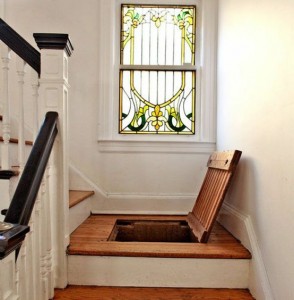
Another playing technique that I employ during this middle stages of memorization is to identify and work with what I call "trap doors." These are areas within a piece that look, sound, and/or feel like similar to other areas in the same piece. These can be in the same key, but you might even find trap doors in different keys. When one is unaware of a trap door, it's very easy to jump from that place in a piece to an entirely different location. This isn't so bad if you don't jump too far, but, in one case, I found myself in a trap door that opened at the beginning of a piece and took me to about twenty measures from the end! (The audience should have gotten its money back.)

An obvious example of a trap door would be jumping from the exposition directly to the recapitulation in a sonata form movement. Another example can be found in the C# Prelude from Bach's first book of The Well-Tempered Clavier. Here, it's very easy to jump from anywhere in the first eight measures to anywhere in the eight measures starting at m.55--or, when you get to m.55, in the opposite direction. It's also easy to confuse m.63 with m.87. And in Scarlatti's K. 517, it's easy to jump from one key to another by taking m.16 to the sequence that begins at m.68. Owch!

At this stage in your practice, you need to identify each and every one of your trap doors. Even if you're playing your pieces straight through without any problems, it's important to realize that lapses can occur, and you must prepare for them before they occur. To that end, knowing the location of each trap door is just about as important as knowing your landmarks. Make sure that, if you fall through that trap door, you have an exit strategy that doesn't include ending your piece several minutes early.

I often unwillingly uncover trap doors just before a recital performance. I owe this to being more self-conscious than in my usually relaxed practice. In fact, I've uncovered trap doors during my warm-up time just before a concert. This is extremely nerve wracking! Because this has happened to me several times, I make every effort possible to find those nasty pitfalls early in the memorization process. They aren't always so evident (as in my Scarlatti example), so you may not identify them until you've memorized the piece and entered the middle stages of memorization.

In my previous post, I wrote about the practice technique of making yourself nervous. You can use your trap doors to create lapse-like situations. Once you've created a situation for yourself, try to come up with as many escape routes as possible, including improvisation. You can't guarantee that the exact same scenario will happen in concert, but having a familiarity with all of your options will help you to handle any crisis with grace and élan.

Tuesday, September 3, 2013

Playing techniques

I generally feel that, in the same day's practice session, mental work should precede playing work. In real life that's what happens. You'd never do mental work after playing a recital, for instance--unless you're reliving the recital, good or bad, in a post-concert restless night!

As I wrote in my previous post, you might want to alternate days of mental work and days of playing work. You might also have less time in your practice session, so you might just touch on, for instance, your landmarks. Just as you might envision each landmark's starting point, you could play the start of each landmark instead of playing the entire piece. For me, this sort of thing works best in reverse order.

Let's presume that you've gotten very sure of your piece and that you've gotten into a comfortable, though varied, practice routine of mental and playing work. You're quite confident in your memorization and in your interpretation of the piece, but you want to make sure that your piece is really ready to go. Other than jumping around from landmark to landmark, what are some ways in which you can make your playing work varied?

For one, you could simply play through the entire piece for fun. By "for fun" I mean that you are playing this in a way that is completely relaxed without much attention to landmarks or visual memory. For me, it's very rare when this type of playing happens in concert. If it does happen, it's usually followed by a lapse when I start to realize that I'm playing before a live audience! This "for fun" playing really shouldn't become a regular thing, but it's nice to remind yourself how fun it is to actually play well without any stress. When we're on stage, we need to give the appearance of this relaxation, but we have to be very conscious of what we're doing. All told, I wouldn't recommend this type of playing more than twice a week. It can be harmful to what it is you are trying to achieve.

In contract to the "for fun" playing, I often engage in super-concentrated playing. Here, I am forcing myself to anticipate each landmark, to visualize them before I get there. I even try to visualize every note while playing, especially in fast music, thus overriding any tactile response. I don't want this type of self-consciousness to happen in concert, but, if it does when, say, I'm excessively nervous, I'm ready to handle it. Another reason to force landmark anticipation and visualization is to keep your mind where it needs to be: on the music. It's all too easy in this middle stage of memorization to play "for fun" with little regard for focus and detail. Beware of losing the Inner Game!

Sometimes I try to make myself nervous by deliberately creating memory lapses. In doing so, I create a situation in which I can practice working my way out of a lapse, either by jumping to an earlier or to a later landmark. In some cases, I won't be in a spot where it's easy to jump to a landmark, so I must force myself to improvise till I find myself in a place for smooth and convenient transition. (New to improvisation? Hang in there: I'll touch on it in a later post.) Very importantly, don't do too much of this type of practice. It is very easy to make nervousness a learned response, and you might find yourself establishing some specific and regular lapse areas in your piece. 


Be nice to your Doppelgänger.
My teacher John Whitelaw talked about a Doppelgänger technique in which the performer would picture him or herself as an audience member while also playing. Although John and I were working with music from score, this technique has excellent applications to the memorizing musician. It takes a little practice, but you'll find that you will hear the music differently--indeed, like an audience member. This in itself can add a bit of nervousness and realism to the play-through experience. A similar technique is to record yourself, treating the recording as if it needs to be perfect.

(I could go on about using audio or video recordings as a practice technique, but that's not really in the scope of this blog. In short, I'm not a big fan of the process because one ends up modifying the interpretation more and more to fit the particular circumstances of the recording instead of working purely with one's ear.)

With all of this playing--and the excitement about finally being able to play through a piece after so much work--, we can not forget one of the most important playing techniques: to not play at all and to work mentally through the score. Don't neglect your mental work.


With so many possibilities, what are some other playing techniques that you can thing of? Post your comments here!


Monday, August 26, 2013

The Middle Stages of Memorization: You've got it! Or so you think...

So now you've gotten a pretty good foundation with your piece. In fact, you're able to play it through completely by heart with only a little bump here or there. Or maybe you've even played it perfectly once or twice.

Now what are you going to do? You feel pretty good about it, but you're nervous about playing it in public. On a good day, you can play the piece really well, but on a bad day you don't feel completely ready.

Welcome, friend, to the Middle Stages of Memorization, a musical purgatory that lies between the early excitement of memorizing a piece and the late confidence of knowing that you have a solid piece in your repertoire.

Here's the problem: The early stages of memorization have very clear goals. You need to get from A-Z, and, as I've been outlining, there are some very clear ways to do that. At this point, it's very hard to assess your goals when you're so close to performance-level memory. Am I ready yet? Do I need to do more? How will I know when I'm ready? Scheduling a performance in order to find out the answers is not a wise way to go about this!

The middle stages create their own impatience. You're almost there, but not there yet. How much mental practice do you need to do? Should you just play through the piece till it's perfect? When should you add new repertoire to memorize? Will this process ever be over?

Most importantly, when can you let a piece rest? You've spent so much time bringing your piece to this level, but how do you know when enough is enough? 

These are all very challenging questions to answer, and you may find yourself quite unsettled at this point. In my upcoming posts, I will address this issue and present some techniques and methods for finding your answers.

Friday, August 23, 2013

Now you're dancing on air!

Dancing on air!
I don't know about you, but I always find that the learning of the music is more fun than the performing of the music. There's a certain feeling when all of your landmarks are learned, you're able to play them straight through, and you finally get the piece to click. You're dancing on air! What a wonderful, affirming feeling! All of your hard work comes together in one transcendent moment.

But...sigh...now you've got to keep things afloat. This brings us to the next section of this blog: The Middle Stages of Memory. There's much to be done in order to keep your piece dancing on air, fresh and ready for performance. And this, for me, is where work becomes work. You see, the memorization part of this journey is just the beginning. Now you have to learn how to maintain the memory without becoming an automaton in performance. You also have to learn how to deal with nerves and fear. You haven't danced on air for an audience yet!

If you've followed all of the suggestions I've set forth, you've developed some good habits around your repertoire. I assure you that what we've covered is more than half the battle. (Indeed, the rest of this blog will be shorter than what you've already read.) With your good habits having set a firm foundation, this next stage won't be very difficult for you. But it may be tedious because it's not really learning. It's maintenance and planning. 

How are you going to minimize your practice so that your performance is inspired? At the same time, how are you going to maximize your practice so that, when on stage, you don't have a single doubt about your mastery of memorization? This is hard work. It takes planning and patience.

Whew! Be prepared to find out if you truly love what you do.

Friday, July 12, 2013

You and your metronome

Much of what I can say about using a metronome is standard wisdom for those who practice music. As I already discussed, the field of "early music" tends to eschew these modern inventions. In any event, knowing where the absolute beat should lie is a very useful piece of information.

For the memorizing musician, the metronome takes on a new significance. Because we are working without score and, sometimes in performance, under fear of memory lapse, it's really good to know the optimal tempo for a piece. And, by optimal, I don't mean "fastest." This is to say that, when one works from memory, it can be easy to become too concerned with the notes or the maintenance of memory to give much thought to tempo. Of course, this scenario would indicate that one wasn't really listening to what one was doing--but that's another matter entirely.  Suffice it to say that it's a good idea to know how fast or how slow a piece should go. This is your own interpretive decision, unless the composer has left specific indications.


I have a hunch (based on my own past habits) that musicians who don't play from memory don't do a lot of metronome work. As I feel that working from memory forces all good habits, I'm aware that not working from memory allows for apathy. In my own case, I didn't use a metronome for years. When I started working with living composers, knowing their beat became a necessity; when I started working from memory, knowing my beat became even more imperative.

When I resumed my memory work, I didn't start working with a metronome right away. I remember one concert when I arrived to do my warmup, only to realize that just about all of my fast tempi were the same. That's a disconcerting thing to consider just before a recital! My only explanation is that, in my memorization work, I had settled into a comfortable pace with tempi and had not really thought much about it until I was on the spot. I would like to suggest that, had I not been playing that recital from memory, I might never have noticed it at all. Memory forces a certain level of self-examination.

My own personal anecdotes aside, there are some very specific ways in which metronome work can help your memorization practice.

  1. Slow metronome work (from memory, of course) helps to avoid any reliance on tactile memory.
  2. Slow metronome work helps to avoid sentimental practice.  It's easy to get caught up in the emotions of our music. By forcing a slow tempo, we can focus just on making sure that we know the notes.
  3. Slow metronome work makes sure that a piece is rock-solid. Every note goes where it should metrically, and that insures that every note is properly memorized.
As you can see, I don't have much use for non-slow metronome work, except when I'm trying to find the optimal tempo for a piece. From the standpoint of learning memorization, a slow metronome is the best tool.

I haven't written too much yet about working away from the instrument, but one of my favorite techniques is to work with a slow metronome. The metronome is very good at keeping my mind from wandering while I'm mentally working my way through a score. It keeps me from mentally rushing through my well-memorized passages, and, just as when playing, it makes sure that every note is sitting in the correct metric place.

Do you use a metronome to help your memorization practice? Or do you have some metronome techniques for any type of practice, memorized or otherwise? Post your thoughts here!

Wednesday, July 3, 2013

In For the Long Haul: Three Types of Memory

There's quite a bit of information on the internet about musical memory. However, I find that it's either too scientific or too cursory. The scientific pages go into great detail about what might be going on in the brain, and the other sites tend to give a series of tips in short form. Because memorization is such an intense, drawn-out process, I find that a handful of tips doesn't give justice to the needs of the process. In turn, scientific research doesn't create an applied, practical approach.

While there is some variation among the research, it's generally accepted that there are three main types of memory:
  • tactile
  • aural
  • visual
Some of the research adds additional categories, such as structural, emotional, and linguistic, but I feel that these are subcategories or crossover categories from the three main types. (For more on these categories, see Chapter 33 in the Oxford Handbook of Musical Psychology.)

Tactile memory, generally considered the most fleeting, is the memory of automatic response. As muscle memory, it has little, if any, basis in the intellect, and it is learned by simple repetition. On the whole, tactile memory comes into play with extremely technical (read: fast) music. While it's often the first type of memory to be lost under pressure, it's also saved me in a number of instances when I couldn't see or hear what was coming next; thankfully, my fingers kept on going.

Aural memory is best when a musician has an excellent ear--and one can never have too good of an ear. While one may lose tactile memory, aural ability allows one to play by ear, anticipating upcoming pitches by "hearing" and finding those notes in advance. The memorization process will be greatly accelerated when one has already heard a piece many times--either by one's one playing or by hearing other performances. For this reason, memorizing a piece from scratch without having previously heard it can be a lengthy process.

Visual memory is exactly what it should be: seeing the music as you're playing it. This type of memory can be built entirely at the instrument, but it's most solid when learned away from the instrument. In my own practice, I tend to bring a piece to rough memory at the instrument (tactile and aural) and then move more and more away from the instrument to solidify my visual memory. At times, I'll start the visual process sooner, but in my own impatience, I tend to prefer playing the instrument instead of thinking about it. (That's my own problem. Don't make it yours!) When a program is good to go, however, I will spend at least half, if not two-thirds, of my time with a score, away from the instrument.

This leaves us with those subcategories. All three mentioned (structural, emotional, and linguistic) are created when practicing the main types of memory. Structural is based in musical form, and it needs to be tied to all three memory types from the beginning of the process. Emotional memory might have more to do with performance experience (and even anxiety). In my opinion, it doesn't hold a solid place in the practice room, although one must learn to manage and be aware of this type of memory. Finally, linguistic memory--the process of narratively guiding oneself through various cues and landmarks--is, for me, also a part of the three main types of memory. As it's based in cues and landmarks, it's closely tied to structural memory and, by association, the three main memory types.

Hopefully, this is about as scientific as I'll get in this blog, and, trust me, I'm not getting nearly as scientific as the hardcore research that's out there. If I could summarize the goal of my approach to memorization, it would be this: 
I should be able to write out every memorized piece away from the instrument.
To do so, I would call upon my visual, my aural, and (even!) my tactile memory.

Wednesday, June 19, 2013

(Why you shouldn't memorize: Part the First)

You know my opinion: memorization of music for performance is essential.

Shortly after publishing this post, a colleague wrote:

At some point it may be good for you to rethink the use of the term 'lazy' when describing individuals who do not memorize.  Perhaps that is how you are now interpreting your own situation but there are plenty of variables that lead performers to choose one path or the other.  Ultimately, I think performers need to have a sense of security and safety - not so much comfort which can lead to complacency but the sense that one is free to put your best self forward.  For some, the printed page is a barrier and memorization frees them from that; for others, the fear of forgetting that which is memorized becomes the barrier.
After receiving his email, I amended the penultimate paragraph of that post from this:
But in the current cultural climate, can we musicians afford to be lazy? When our audiences for live music are dwindling, can we afford to give them anything less than our best?
to this:
But in the current cultural climate (especially as a harpsichordist!), can I afford to be lazy? When audiences for live music are dwindling, can I afford to give them anything less than my best?
I really want to agree with my colleague and not offend him or other colleagues--hence, the paragraph revision. However, I am left feeling that there is a sort of political correctness that has crept into the musical world. Because some people have fear or difficulty performing from memory, are audiences now, in the interest of inclusiveness, required to accept a non-memorized program as being the norm?

In the harpsichord world, it is the norm to perform from score. As one famous harpsichordist was known to have said, "In the baroque period, one only performed without music when one was improvising or playing one's own music." Presumably, if I were to play Bach from memory, the audience will assume that it's my own composition. 


In the interest of authenticity, perhaps there should be no harpsichord recitals, because the recital, as we know it today, didn't exist during the 18th century!


And speaking of historical authenticity, another colleague wrote to tell me this absolutely absurd anecdote:

I remember an incident where I took an 18th-century flute duet to my lesson, with a fellow flutist friend playing with me. There was a half cadence followed by a page turn, so I suggested we should photocopy to avoid it. Our teacher told us that there weren't photocopy devices back then and since the composer kindly wrote "tournĂ© vite" at the half cadence, we should just follow his instructions and "be historical". Imagine if I had suggested then to play memorized??
This reminds me of a harpsichordist who said he didn't own a metronome because metronomes didn't exist during the baroque period.

Hmmm...I could go on. I think I shall in the next post.

Saturday, May 25, 2013

Not an easy path

My very first couple of back-to-memory experiences weren't really good ones. I had memory lapses. In fact, my first two experiences, in which I played the same binary-form Bach movement, had lapses so severe that I had to noodle my way through the B section to a final cadence. I don't even think that my ending key was the same as the starting key.

I should have known better! Indeed, my return-to-memory work had consisted mainly of repetition. Then again, this was more or less how I had been practicing when I worked with music.

And I continued to have lapses, and I continue to have lapses...but the nature of today's lapses is much different and, most importantly, the recovery is very different. While it's possible that there are a few individuals capable of playing note-perfect, memorized programs, I'm convinced that the majority of memorized recitals have a fair share of near-misses and faking. I'm not at all suggesting that we should strive towards imperfection, but we need to work as inhabitants of an imperfect world.

In my previous post, I discussed my unique perspective as one who skipped nearly twenty years of playing from memory. With that perspective comes the realization that I now have a lot of confidence as a player. Perhaps this confidence has kept me from the fear that most people would have with on-stage memory lapses, but I'm not so sure. I would like to suggest that in order to conquer memory-related fear, we must:
  • accept that perfection is, while desired, nearly impossible;
  • always have an exit strategy.
Before closing this post, I want to get back to the reason for this blog. I truly don't think that I have any special gift for memorization. This has been hard work and it continues to be hard work. I have created this blog because I think that the difficulties I've had are probably some of the same difficulties that others have had. With this empathetic understanding, we can all become better at learning music by heart and, in turn, become better musicians.