Showing posts with label improvisation. Show all posts

Wednesday, September 25, 2013

Improvisation

What are your options if you have a lapse? You could stop playing. You could start all over from the beginning. You could become angry and repeat a passage over and over again, much to the general discomfort of your audience. 

These are all really bad ideas. How about this? You could improvise until you make your way forward or backward to a landmark.

It's easy for me to think about improvisation. After all, I make a significant portion of my income as a church organist, and improvisation is at the heart of any successful organist's career. But maybe you don't have any experience with improvisation--especially in front of an audience.

If you do have a lapse, it may be possible to jump directly to a landmark. I find that this can work well, depending on the situation. But, in many cases, you don't have that option, so you need to have a plan. To begin, don't think of improvisation as something that you have to bring to a high artistic level. Let's save that for the jazz musicians and the great French cathedral organists. Your improvisation is going to have a very practical purpose: to get from A to B--or maybe from B to A. It doesn't need to be anything more than that.

You now know what your improvisation needs to do. Let's consider what it needs to be. First, it needs to be in the key of what you're playing, and it will need to modulate if your next landmark is in another key. If you know your landmarks well, you have a pretty good idea of what keys they start out in. Second, your improvisation should maintain the rhythm of where you are and, if necessary, transform itself to the rhythm of where you are going. Third, your improvisation should maintain the texture of the passage and, again if necessary, develop into the texture of where you're going to end up.

In other words, your improvisation needs to be in the style of what it is you're playing. In some ways, that's the easy part, and there really isn't any right or wrong. It just needs to be convincing. The harder part might be trying to modulate to another key, but that's something you can practice both physically and mentally.

It's possible to practice your improvisation in a pedantic way, working your way through various modulations and making sure that you can get from landmark to landmark. Unfortunately (or fortunately), there's not really that much time in the day to practice like this. You can also force lapses by making yourself nervous, a technique I discussed earlier

The bottom line is that the vast majority of your audience (and, most likely, 100 percent of your audience) won't know that you're improvising. For you, the lapse moment may feel like an eternity, but you also know, quite rationally, that it's not that big of a moment. This is a game of outwitting the situation, and you have to learn to keep your cool.


This brings us back to fear. Don't forget this: Your audience is not there to hear you make mistakes. They give you the benefit of the doubt in what you are doing, and they will always assume that you are doing the right thing. They're not looking for mistakes, and they really wish you the best so that they can enjoy the performance as much as possible. All you have to do is uphold your end of the bargain by letting them think you've played a perfect performance--whether or not it's true. Keep your cool!


Thursday, September 5, 2013

Trap doors

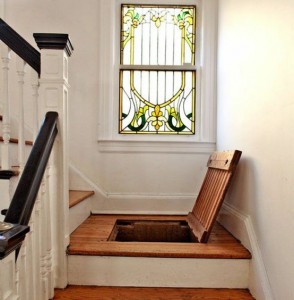
Another playing technique that I employ during this middle stages of memorization is to identify and work with what I call "trap doors." These are areas within a piece that look, sound, and/or feel like similar to other areas in the same piece. These can be in the same key, but you might even find trap doors in different keys. When one is unaware of a trap door, it's very easy to jump from that place in a piece to an entirely different location. This isn't so bad if you don't jump too far, but, in one case, I found myself in a trap door that opened at the beginning of a piece and took me to about twenty measures from the end! (The audience should have gotten its money back.)

An obvious example of a trap door would be jumping from the exposition directly to the recapitulation in a sonata form movement. Another example can be found in the C# Prelude from Bach's first book of The Well-Tempered Clavier. Here, it's very easy to jump from anywhere in the first eight measures to anywhere in the eight measures starting at m.55--or, when you get to m.55, in the opposite direction. It's also easy to confuse m.63 with m.87. And in Scarlatti's K. 517, it's easy to jump from one key to another by taking m.16 to the sequence that begins at m.68. Owch!

At this stage in your practice, you need to identify each and every one of your trap doors. Even if you're playing your pieces straight through without any problems, it's important to realize that lapses can occur, and you must prepare for them before they occur. To that end, knowing the location of each trap door is just about as important as knowing your landmarks. Make sure that, if you fall through that trap door, you have an exit strategy that doesn't include ending your piece several minutes early.

I often unwillingly uncover trap doors just before a recital performance. I owe this to being more self-conscious than in my usually relaxed practice. In fact, I've uncovered trap doors during my warm-up time just before a concert. This is extremely nerve wracking! Because this has happened to me several times, I make every effort possible to find those nasty pitfalls early in the memorization process. They aren't always so evident (as in my Scarlatti example), so you may not identify them until you've memorized the piece and entered the middle stages of memorization.

In my previous post, I wrote about the practice technique of making yourself nervous. You can use your trap doors to create lapse-like situations. Once you've created a situation for yourself, try to come up with as many escape routes as possible, including improvisation. You can't guarantee that the exact same scenario will happen in concert, but having a familiarity with all of your options will help you to handle any crisis with grace and élan.

Tuesday, September 3, 2013

Playing techniques

I generally feel that, in the same day's practice session, mental work should precede playing work. In real life that's what happens. You'd never do mental work after playing a recital, for instance--unless you're reliving the recital, good or bad, in a post-concert restless night!

As I wrote in my previous post, you might want to alternate days of mental work and days of playing work. You might also have less time in your practice session, so you might just touch on, for instance, your landmarks. Just as you might envision each landmark's starting point, you could play the start of each landmark instead of playing the entire piece. For me, this sort of thing works best in reverse order.

Let's presume that you've gotten very sure of your piece and that you've gotten into a comfortable, though varied, practice routine of mental and playing work. You're quite confident in your memorization and in your interpretation of the piece, but you want to make sure that your piece is really ready to go. Other than jumping around from landmark to landmark, what are some ways in which you can make your playing work varied?

For one, you could simply play through the entire piece for fun. By "for fun" I mean that you are playing this in a way that is completely relaxed without much attention to landmarks or visual memory. For me, it's very rare when this type of playing happens in concert. If it does happen, it's usually followed by a lapse when I start to realize that I'm playing before a live audience! This "for fun" playing really shouldn't become a regular thing, but it's nice to remind yourself how fun it is to actually play well without any stress. When we're on stage, we need to give the appearance of this relaxation, but we have to be very conscious of what we're doing. All told, I wouldn't recommend this type of playing more than twice a week. It can be harmful to what it is you are trying to achieve.

In contract to the "for fun" playing, I often engage in super-concentrated playing. Here, I am forcing myself to anticipate each landmark, to visualize them before I get there. I even try to visualize every note while playing, especially in fast music, thus overriding any tactile response. I don't want this type of self-consciousness to happen in concert, but, if it does when, say, I'm excessively nervous, I'm ready to handle it. Another reason to force landmark anticipation and visualization is to keep your mind where it needs to be: on the music. It's all too easy in this middle stage of memorization to play "for fun" with little regard for focus and detail. Beware of losing the Inner Game!

Sometimes I try to make myself nervous by deliberately creating memory lapses. In doing so, I create a situation in which I can practice working my way out of a lapse, either by jumping to an earlier or to a later landmark. In some cases, I won't be in a spot where it's easy to jump to a landmark, so I must force myself to improvise till I find myself in a place for smooth and convenient transition. (New to improvisation? Hang in there: I'll touch on it in a later post.) Very importantly, don't do too much of this type of practice. It is very easy to make nervousness a learned response, and you might find yourself establishing some specific and regular lapse areas in your piece. 


Be nice to your Doppelgänger.
My teacher John Whitelaw talked about a Doppelgänger technique in which the performer would picture him or herself as an audience member while also playing. Although John and I were working with music from score, this technique has excellent applications to the memorizing musician. It takes a little practice, but you'll find that you will hear the music differently--indeed, like an audience member. This in itself can add a bit of nervousness and realism to the play-through experience. A similar technique is to record yourself, treating the recording as if it needs to be perfect.

(I could go on about using audio or video recordings as a practice technique, but that's not really in the scope of this blog. In short, I'm not a big fan of the process because one ends up modifying the interpretation more and more to fit the particular circumstances of the recording instead of working purely with one's ear.)

With all of this playing--and the excitement about finally being able to play through a piece after so much work--, we can not forget one of the most important playing techniques: to not play at all and to work mentally through the score. Don't neglect your mental work.


With so many possibilities, what are some other playing techniques that you can thing of? Post your comments here!